From LAU to Boston: Mohammad Shahin Wins Fulbright Joining Global Leaders in Public Health and Data Science
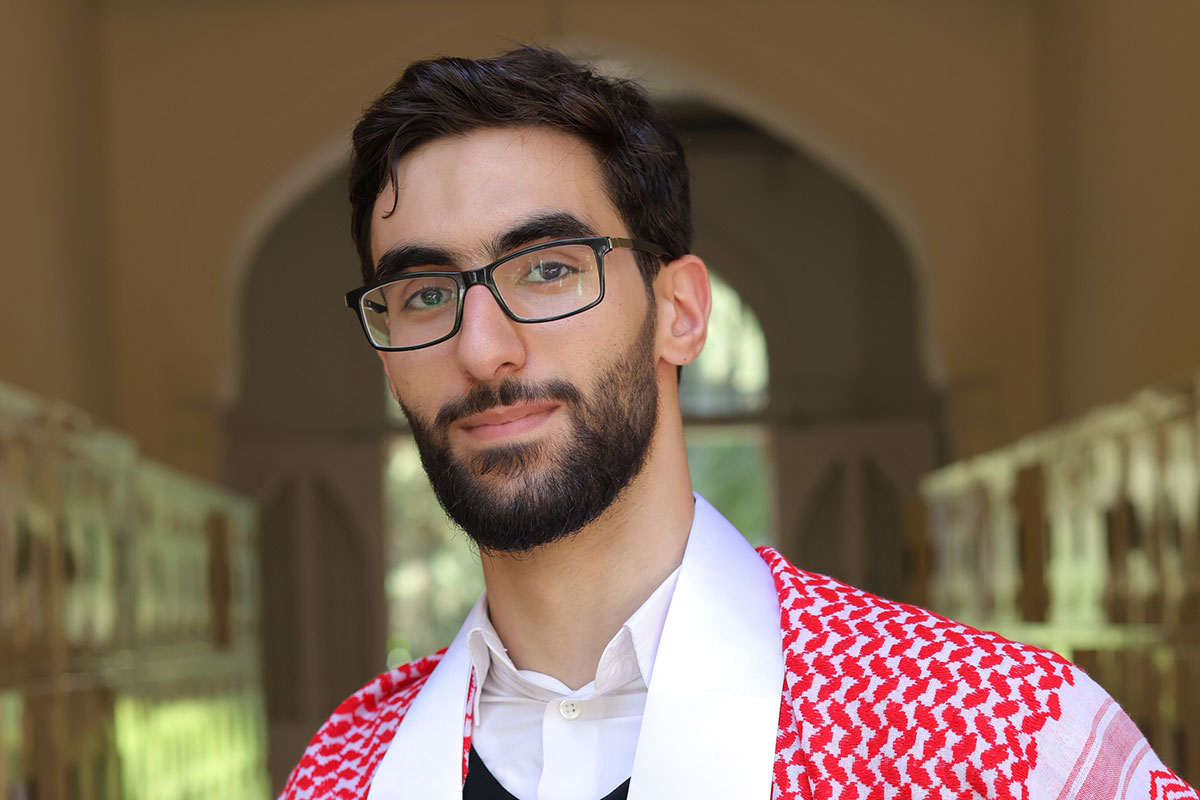
Mohammad Shahin, a Computer Science graduate from the Lebanese American University and the MEPI Tomorrow’s Leaders Program (’24), is using technology and data to make healthcare better for people who need it most. His hard work earned him the prestigious Fulbright scholarship to study public health at Boston University in America.
He will specialize in Epidemiology & Biostatistics and Health Policy & Law, with the goal of fusing artificial intelligence and data science with more just, accessible public health systems.
In many Middle Eastern countries, hospitals and clinics are often too crowded, and many people can’t get the medical care they need. According to health experts, more than 30% of people in this region don’t have access to basic healthcare services. Mohammad saw this problem and wanted to fix it.
“I come from a region where public health is too often shaped by crisis rather than design,” Shahin said. “Through Fulbright and Boston University, I want to contribute to building systems that are proactive, precise, and people-centered especially for vulnerable populations.”
When Mohammad was studying at LAU, he learned about how technology can be used responsibly to help society. This inspired him to create a computer program called Istetab that uses artificial intelligence to predict diseases and help doctors decide which patients need care first. Under the guidance of Dr. Ramzi Haraty, Mohammad built this tool specifically to help poor communities and refugees who often struggle to get medical attention.
In 2025, Mohammad got a job at Electronic Health Solutions (EHS), Jordan’s national health tech infrastructure provider, where he worked on projects that helped thousands of patients. His work included designing natural language processing tools to extract disease progression data for Multiple Sclerosis patients and implementing sophisticated algorithms to resolve duplicate patient entries across multilingual systems.
“Every piece of data represents a real person who needs help,” Mohammad says. “My work isn’t just about computers, it’s about making sure that everyone, whether they’re refugees or poor families, gets the same good healthcare as everyone else.”
The Fulbright scholarship is one of the hardest scholarships in the world to get, and it shows how impressive Mohammad’s work really is. At Boston University, he’ll work with famous professors to learn more about how artificial intelligence can make healthcare fairer for everyone.
“This is my chance to make an even bigger difference,” Mohammad explains. “I want to come back home with new ideas that can change how we take care of people’s health.”
Mohammad’s story shows how someone can use their skills and desire to help others to solve real problems. And as he prepares for this exciting next chapter in his life, he continues to demonstrate that the future of public health lies not just in treating illness, but in preventing it through intelligent, compassionate, and data-driven solutions.